This website use cookies to ensure you get the best experience on our website


Feeding the Pregnant Mare: What Every Horse Owner Should Know
Feeding a pregnant mare can be one of the most misunderstood aspects of breeding management. Too often, we think “pregnant” means “feed more.” In truth, the mare’s nutritional needs change very little for the first two trimesters — and overfeeding early in pregnancy can do more harm than good. Horses are not designed to eat a few large meals per day. They thrive on constant access to forage, especially in late pregnancy.
The First Two Trimesters: Keep It Steady
During the first six to seven months of pregnancy, the developing foal grows slowly. The mare’s energy and protein requirements remain close to those of a non‑pregnant horse in light work.
Overfeeding at this stage — especially with high‑protein or grain‑heavy diets — can cause unnecessary weight gain, stress her kidneys, and even create metabolic problems that affect the foal’s development.
Digestive Health and Natural Feeding Behavior
In nature, horses graze 50–60% of the day, eating small amounts nearly constantly. Domestic feeding practices—especially meal-based routines—don’t support this biology. The pregnant mare is particularly vulnerable to dietary deficiencies or excesses.
Unlike most mammals, horses lack a gallbladder, which means they can't store digestive bile for large meals. Bile is a digestive fluid produced by the liver, which helps to break down and emulsify fats in the small intestines, making them easier for enzymes to digest. A gallbladder stores the bile for release after a meal. In horses, the lack of a gallbladder means bile is constantly secreted. This is fine when the digestive system of the horse is allowed to function as designed- which is for a nearly constant amount of digesting food moving through the stomach and intestines from grazing. Unfortunately, many horses are fed in the manner of a large meal given twice a day. This, along with long periods of time passing where stomach acid is present and food is not, is a big factor in the development of ulcers, poor digestion, malnutrition, and colic. All horses require exercise, companionship, and the ability to feed on forage throughout the day to truly thrive. This is even more relevant in the pregnant mare. Especially as she becomes heavier and heavier in foal and her digest tract becomes compressed. The increased need for nutrients makes multiple small meals throughout the day even more critical than it already is. The broodmare should have plenty of daily access to good quality grass hay or pasture as well as room to move freely as the movement will help maintain good circulation and minimize stocking up in the legs and late term pregnancy edema along her belly as foaling nears. Some edema is expected as the increased weight within the belly will compress vessels and somewhat interfere with lymph circulation
In early pregnancy aim for consistency:
Maintain the mare on good‑quality grass hay or pasture.
Keep protein around 10–12% of total intake.
Avoid the temptation to “feed for two.”
Key takeaways:
Keep forage (grass hay or pasture) available at all times, not just a few scoops of grain twice a day. Even high‑quality grain or pellets can’t replace the role of fiber in keeping the gut healthy and active.
Her digestive system is compressed in late pregnancy as the foal grows, the mare may eat less at a time, but she still needs her full daily fiber intake—just spread out.
She has less room for large meals, as feed amounts increase in the final trimester, its best to break the day's total ration into several smaller feedings throughout the day
Meal-feeding increases the risk of ulcers, gas, colic, malnutrition, and poor digestion
A mare entering pregnancy in slightly above ideal condition is far better off than one that is underweight.
Once lactation begins, catching up is nearly impossible. A mare that begins losing condition after foaling often continues to decline despite increased feed.
Calcium requirements increase during final trimester to aid the mare in milk production and uterine muscle contractions in the mare and in final fetal bone development that is required before birth- calcium can be added to the diet through the addition of legume hays such as alfalfa or dietary calcium supplements
Body Condition: Setting Her Up for Success
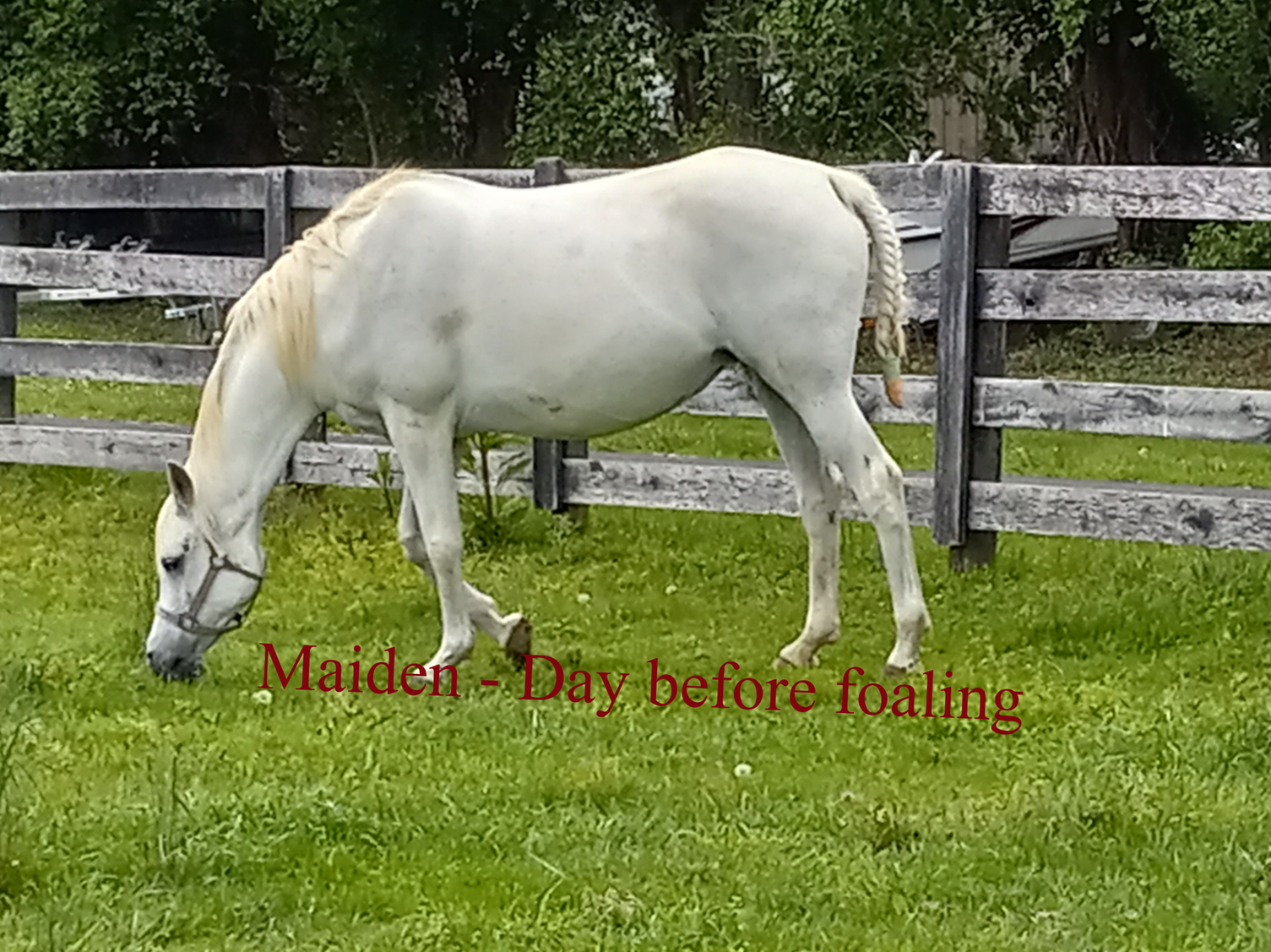
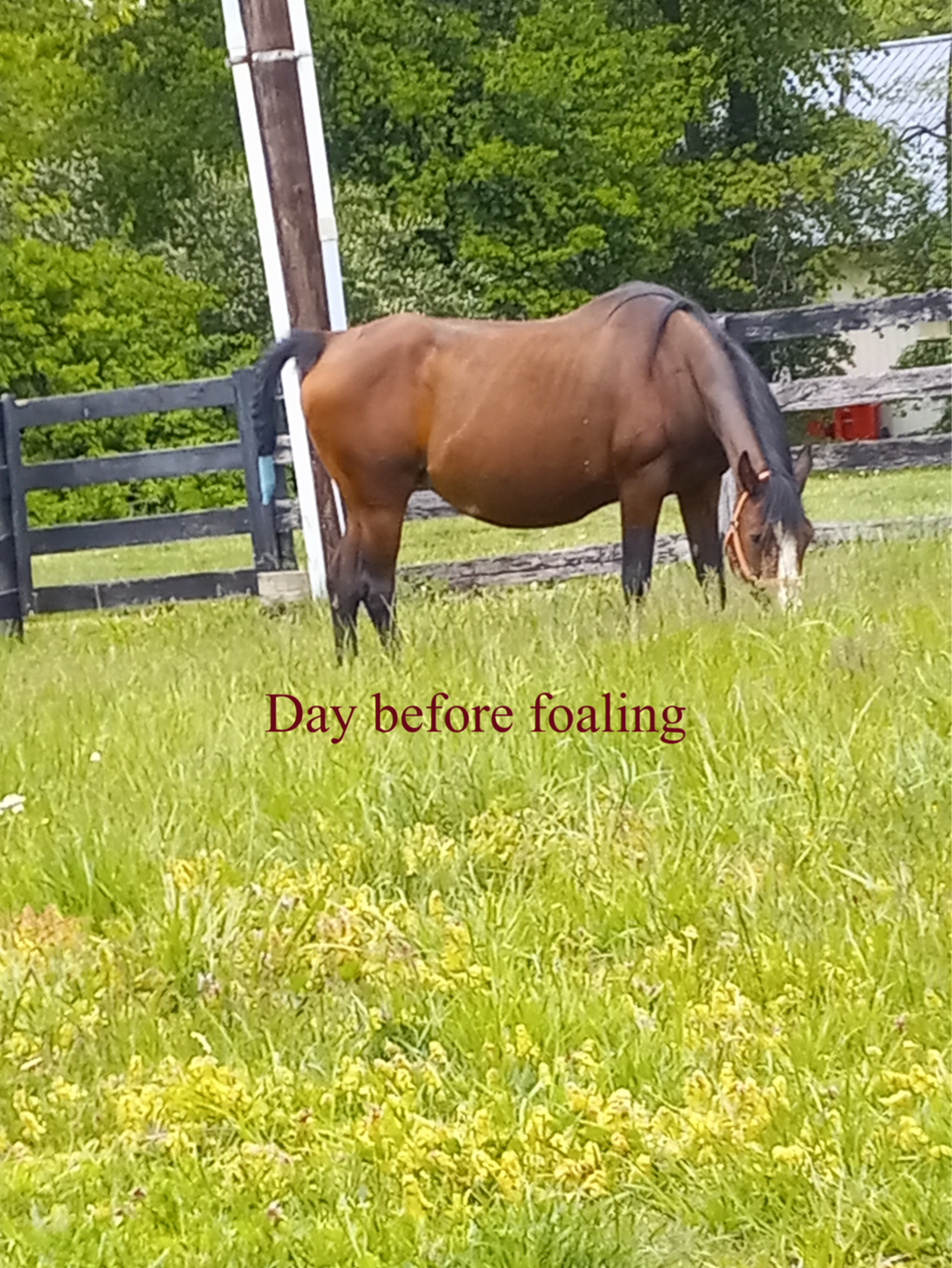
A mare entering pregnancy in slightly above ideal condition is far better off than one that is underweight. She should have a soft, rounded outline over ribs and hips — not fat, but with enough reserves to compensate for any stresses and to support late pregnancy and lactation preparation.
If a mare starts thin, it can be difficult to safely add weight during pregnancy without overloading her digestive system. Her system will supply the pregnancy with what it needs before providing for her own body’s needs. In these cases, provide a constant supply of good quality grass hay, supplemented with a portion of legume hay, such as alfalfa (starting with small amounts to acclimate if the mare is not used to legume hays, which are much richer than grass hay) . Gradually increase concentrates divided in several small feedings, spread out, throughout the day
Once lactation begins, catching up is nearly impossible. A mare that begins losing condition after foaling often continues to decline despite increased feed. Prevention is everything.
The Final Trimester: Where Nutrition Really Matters
The last three months are when nutritional demands climb rapidly. The foal grows most of its bone, muscle, and organ mass during this period, gaining up to 1 pound a day during those final months of gestation— and the mare’s body is preparing for milk production. These processes use up a lot of energy within the mare’s system, hence the need for increase in calories
Calcium, Phosphorus, and Protein Balance
During the last trimester, calcium demand rises sharply to support essential functions, including milk production, bone development in the foal, and building stores to prepare for the muscle contractions during labor
Calcium and phosphorus must stay in balance — ideally 1.5:1. Most concentrate feeds (grain based feeds) and grass hays are high in phosphorus but low in calcium. This imbalance puts the mare at risk.
What Helps:
Legume hays such as Alfalfa are a good calcium source. Add it in measured amounts to a grass-based diet.
The addition of alfalfa to the diet has been shown to relieve ulcers. Though some horses have a low tolerance to the higher protein and richness of alfalfa. Monitor for unusual behavior changes or over excitement and cut back on the amount. A few can’t tolerate it at all with out becoming overly excited.
Avoid overfeeding alfalfa, as too much can cause metabolic issues from excessive calcium and very high protein levels.
If alfalfa isn’t available, calcium carbonate (limestone) can supplement. A tablespoon of calcium carbonate contains 10 grams of dietary calcium. The pregnant in the last trimester needs about 30-40 grams of calcium a day, the requirement increases as the foaling date approaches. If calcium supplementation is needed, adding 3 tablespoons a day of calcium carbonate and increasing that to 4 tablespoons at the beginning of the last month of pregnancy would meet the requirement. One problem with calcium carbonate is that it’s not well absorbed and much of it can wind up being passed out in manure. Nutritionists have recommended using a chelated form of calcium for better absorption. Discuss best options to balance Calcium/Phosphorous for your mare’s situation with your veterinarian and/or equine nutritionist. Especially when in doubt as overdosing calcium can be just as bad as a deficiency
Protein Needs
For the first 6–7 months of pregnancy, most mares meet their protein needs on quality hay or pasture alone (10–12% protein). But in the final trimester, protein demands increase—especially for fetal development.
Protein via a concentrate feed (grain) is often needed to meet those requirements and should gradually increase in the last trimester (also, gradually increase the protein level from 11/12% to around 14 %) to support fetal growth and milk production — but higher levels can be detrimental. Excess protein leads to waste ammonia that can burden the mare’s kidneys and can cross the placental barrier and interfere with normal neurological development of the foal. The one exception being some Thoroughbred mares, who have an increased requirement for protein due to their increased energy output, upwards of 16%)
As a rule of thumb, grain should be 0.5% of the mare’s body weight per day, adjusted monthly in late pregnancy. For example: Theoretically, a nonpregnant 1000 lb mare in proper body condition would require around 5 lbs of concentrate. (in reality some mares will require less some more. For example, my Arabian mares do very well on either no grain to up to 3 lbs a day in a nonpregnant state and close to 6-7 lbs a day in late pregnancy and during lactation. Ponies require much less feed and protein and Thoroughbreds often require much more. Horses, especially pregnant mares, should be fed on an individual basis and if in any doubt it is best to discuss your mare’s best plan with your veterinarian or equine nutritionist.
Going by this theory, the gradual increase in grain during the final 3-4 months of pregnancy would look like this:
Month 8: Increase grain to 0.5% body weight + ½ lb for a 1000 lb mare = 5.0 lbs grain + 0.5 lbs = 5.5 lbs grain per day divided among 2-3 feedings
Month 9: Increase grain to 0.5% body weight + 1 lb for a 1000 lb mare = 5.0 lbs grain + 1.0 lbs = 6.0 lbs grain per day divided among 2-3 feedings
Month 10: Increase grain to 0.5% body weight + 1.5 lb for a 1000 lb mare = 5.0 lbs grain + 1.5lbs = 6.5 lbs grain per day divided among 2-3 feedings
Month 11: Increase grain to 0.5% body weight + 1.5 lb for a 1000 lb mare = 5.0 lbs grain + 2.0lbs = 7.0 lbs grain per day divided among 2-3 feedings
The above is an approximation and may vary on a case by case basis and is to include free choice, high quality grass hay
Carbohydrates & Fiber
The equine digestive system is very sensitive to excessive carbohydrates and too much can actually be fatal. It is critical to know, when adding grain to increase protein, if too much carbohydrate is being given
Too many carbs (from sweet feeds, grains, etc.) can trigger colic or founder.
Horses are very sensitive to excess carbohydrates—especially pregnant mares.
Prioritize fiber. Even if grain meets nutritional needs, the mare still needs fiber to maintain gut motility and prevent colic.
An appropriate amount of fiber from hay and/or pasture is essential for normal digestive tract functioning as well as the nutritional needs. Horses should be getting 1-2% of their body weight a day in good quality pasture grass or hay. Good pasture should provide 2 lbs of grass per hour of grazing. As the foal grows and takes up more and more room in the mare’s abdomen, she may not consume as much at one time but the forage should be available for her to access whenever she chooses. An important note to remember is that it is the fiber content that keeps everything moving through the digestive tract properly. That being said, the lush, soft, “juicy” grass in Spring may not properly meet the fiber requirements and could actually lead to intestinal impaction from the very low fiber content. This can be avoided by providing a ration of hay to add the additional fiber needed.
As the foal grows, the mare may eat less at a time, but she still needs her full daily fiber intake—just spread out.
Adding Fat Safely (When Needed)
If you feel that your mare’s diet is correct but she still appears underweight and her coat is dull, she should be examined by a veterinarian to evaluate for parasites, dental health, or anything else that could be interfering with her reaching optimal health. If a check up does not reveal any serious issues it may just be that the fat content in her diet is too low. This is quite easy to remedy and fat is a safer energy source than carbohydrates. Research has shown that horses can tolerate high levels of fat in their diets without the health risks that accompany increasing carbohydrates and proteins. It is a safe way to provide additional calories and energy without overtaxing her system. Vegetable oils such as corn or soybean oil should be added gradually — beginning with ½ oz per day and increasing by ½ oz every few days up to a maximum of 16 oz, monitoring for tolerance and loose manure. Fat boosts calories efficiently without spiking blood sugar. Increase amounts slowly as directed above and monitor for loose stool which would indicate the mare’s individual tolerance level has been surpassed. If a bout of loose stool occurs, back off the total daily amount to a couple ounces below the current amount. There are also horse specific oils sold that could be used instead of vegetable oils. Another benefit to adding fats to your mare’s diet is an increased shine and bloom in her coat.
Minerals and supplements
Most vitamins and mineral needs are easily met through the horse's regular diet with the exception of certain areas known for deficiencies in the soil. One such example are areas that are deficient in Selenium. If deficient, supplementation can help in many ways, but just as Selenium is essential to good health, too much can be fatal. It is important to discuss this supplement and many others with your nutritionist or veterinarian before implementing it in your feed program to be sure it won’t do more harm than good. In a similar way, some areas may have a too high amount of selenium in the soil already, making grazing itself hazardous.
Fescue poisoning
If your pasture contains Tall Fescue, plan to move your mare off the pasture at least 2 months before she’s due to prevent Fescue poisoning. Also ensure your hay does not contain Fescue.
Why Fescue is a problem- when infected Fescue is ingested by late term pregnant mares it can cause a host of issues which include: poor weight gain, abortions, prolonged gestation, foals born weak, still births, thick placentas, and the most common issue, inhibited mammary development and little to no milk production when the foal is born.
Tall Fescue is a very common and hardy grass. It is found in Kentucky and most southeastern states. Its hardiness and durability make it a good pasture grass and the grass itself is not really the issue. The issue is actually due to an endophyte fungus that infects the grass and ironically, it was discovered that the toxic endophyte is also responsible for the hardiness of the plant. So scientific efforts to remove the endophyte proved detrimental to the health of the grass. The toxin comes from an ergot alkaloid that is produced by the endophyte. The toxin is called Ergovaline. There has been success in developing a novel endophyte Fescue, in which the endophyte has been converted to a nontoxic, “friendly” endophyte, which allows the Fescue to retain its hardiness while rendering the endophyte harmless. The process of establishing a pasture of the novel endophyte Fescue involves an extensive process of killing off the entire pasture to destroy all the toxic Fescue and replanting the novel variety. If you will need a long term safe pasture for your mares, it is worth the work and expense if you live in an affected area.
*We will discuss Fescue Poisoning in more depth in another article
Avoiding Common Pitfalls
Overfeeding energy: Diets too high in calories or carbohydrates can predispose the mare to laminitis or foaling complications.
Too much alfalfa: Excellent calcium source, but use in balance with grass hay.
Underfeeding fiber: Leads to colic risk and digestive upset.
Neglecting mineral balance: Always evaluate calcium, phosphorus, and trace elements (selenium, copper, zinc).
Ignoring feed quality: Mold, fungus, or fescue contamination can cause serious reproductive issues. Always check hay and avoid fescue in late pregnancy.
A healthy foal begins with a well‑fed but not overfed mare.
Key takeaways:
A mare entering pregnancy in slightly above ideal condition is far better off than one that is underweight.
Keep it steady early, with good hay and balanced minerals.
Keep forage (grass hay or pasture) available at all times, not just a few scoops of grain twice a day. Even high‑quality grain or pellets can’t replace the role of fiber in keeping the gut healthy and active.
Meal-feeding increases the risk of ulcers, gas, colic, malnutrition, and poor digestion
Protein and overall energy requirements increase during last trimester- Adjust slowly, adding grain and supplements only as her needs rise.
Calcium requirements increase during final trimester to aid the mare in milk production and uterine muscle contractions in the mare and in final fetal bone development that is required before birth- calcium can be added to the diet through the addition of legume hays such as alfalfa or dietary calcium supplements
Aim for slightly above ideal body condition before foaling — not thin, not fat
Once lactation begins, catching up is nearly impossible. A mare that begins losing condition after foaling often continues to decline despite increased feed.
Her digestive system is compressed in late pregnancy as the foal grows. She has less room for large meals, as feed amounts increase in the final trimester, its best to break the day's total ration into several smaller feedings throughout the day.
The mare may eat less at a time, but she still needs her full daily fiber intake—just spread out.
The key to a strong lactation and an easy birth recovery is preparation — not correction.
Once a mare begins losing condition after foaling, you’re already playing catch‑up. Build her foundation early, and she’ll carry both herself and her foal through the months ahead with strength and grace.
The pregnant mare’s body is doing something extraordinary—don’t let poor feeding habits get in the way.